
Ridge Capping vs Roof Repointing: What's the Difference?
Your roof is one of the most important parts of your home, protecting it from Perth’s changing weather conditions. But over time, even a well-maintained roof can develop issues such as cracked mortar, loose tiles, or deteriorating ridge capping.
Two common roofing services homeowners come across are ridge capping repairs and roof repointing. Although they are closely related, they aren’t exactly the same.
So, how do you know which one your roof needs?
At Insulmate Pty Ltd, we’ve spent over 16 years working with different roofing materials, including concrete tiles, terracotta, and Colorbond. Through our inspections and repair work across Perth, we’ve seen how small roofing problems can lead to more significant damage when left unattended.
In this guide, we’ll explain the differences between ridge capping and roof repointing, the warning signs to watch for, what affects repair costs, and how to decide which service your roof requires.
What Is Ridge Capping?
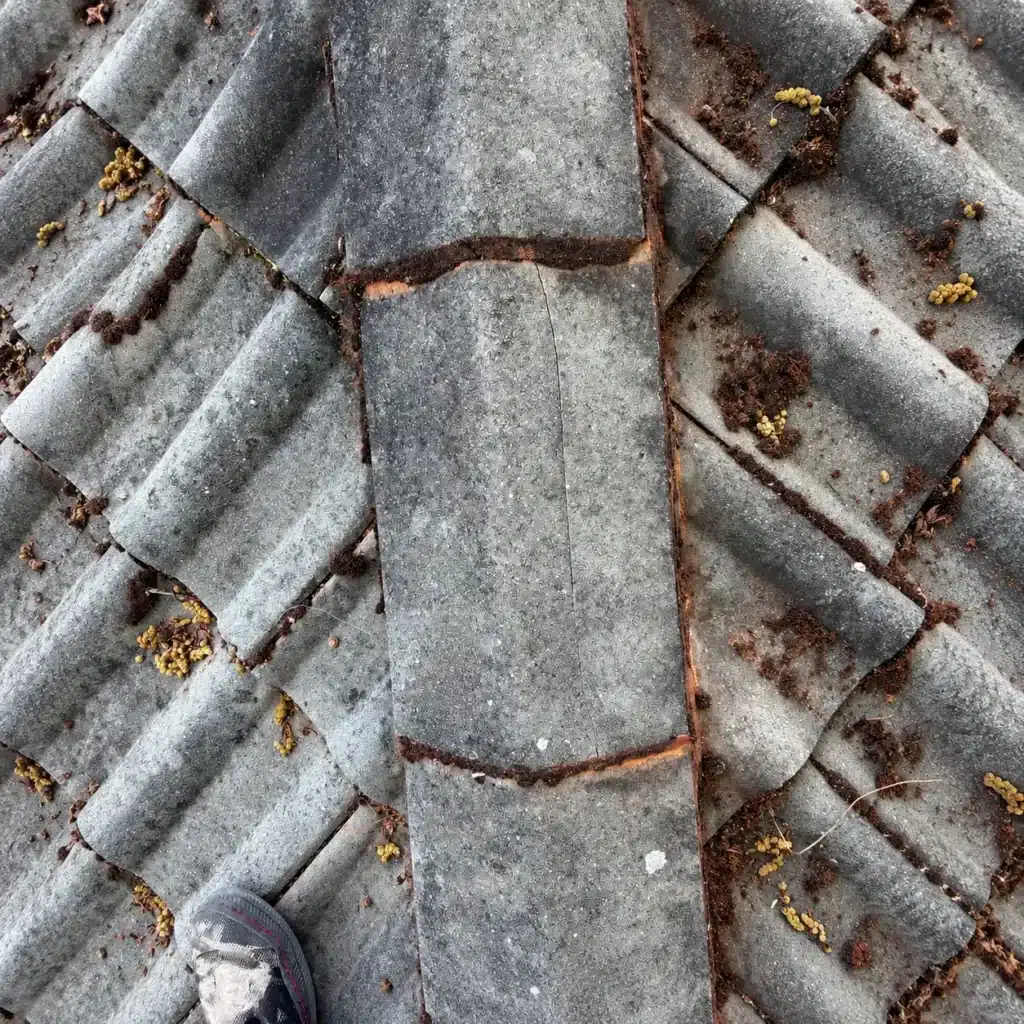
Ridge capping refers to the tiles or specially designed components installed along the highest points of a roof where two sloping roof sections meet.
These components cover and protect the ridge, helping prevent rainwater, debris, and unwanted moisture from entering vulnerable areas of the roof.
On traditional tiled roofs, ridge caps are often secured using bedding mortar, with pointing applied along the edges to help seal and secure them.
On metal roofs, such as Colorbond, the ridge is typically covered using purpose-made metal flashing or capping rather than traditional tiled ridge caps and mortar pointing.
What Is Roof Repointing?
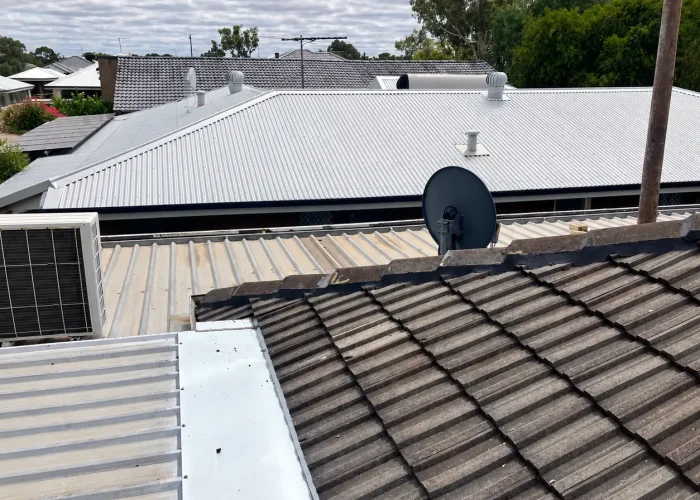
Roof repointing involves repairing or renewing the pointing material around the edges and joints of ridge cap tiles.
Pointing helps secure and weatherproof the ridge capping. Over time, this material can deteriorate due to age, weather exposure, and movement within the roof structure.
When homeowners search for re pointing roof services, they’re generally looking for a way to restore cracked or deteriorating pointing without necessarily replacing the ridge caps themselves.
At Insulmate, we commonly recommend roof repointing when we notice:
Cracks developing in the existing pointing.
Pointing material that is peeling or separating.
Small gaps forming along the joints.
Pointing that has become brittle or deteriorated.
Areas requiring fresh pointing after ridge cap or tile replacement.
For our repointing work, one of the products we commonly use is Westflex Starpoint, a flexible pointing compound designed for tiled roofing applications.
Flexible pointing is designed to accommodate some roof movement while helping maintain a protective seal around ridge cap tiles.
However, applying new pointing over unstable ridge caps or badly deteriorated bedding may not address the underlying problem.
The roof’s existing condition must be assessed first.
Ridge Capping vs Roof Repointing: Key Differences
Although ridge capping and roof repointing work together to protect a tiled roof, they serve different purposes.
| Ridge Capping | Roof Repointing |
|---|---|
| Refers to the components covering the roof ridge. | Refers to renewing the pointing material around ridge caps. |
| Repairs may involve securing, rebedding, or replacing ridge cap tiles. | Work involves addressing cracked, missing, or deteriorated pointing. |
| Common signs include broken, loose, or displaced ridge caps. | Common signs include cracking, peeling, brittleness, or small gaps. |
| More extensive work may be needed if ridge caps or bedding are damaged. | May be sufficient when the ridge caps and bedding remain sound. |
| The scope depends on the number and condition of affected ridge caps. | The scope depends on the extent of pointing deterioration. |
Can You Repoint a Roof Without Replacing the Ridge Caps?
Yes, provided the existing ridge caps and their bedding are still in suitable condition.
If an inspection reveals that the ridge caps are secure and the main issue is deteriorating pointing, repointing alone may be appropriate.
However, if the ridge caps are loose, displaced, or inadequately supported, simply applying new pointing may not provide a lasting repair.
In those situations, the affected ridge caps may need to be lifted, rebedded, repaired, or replaced before repointing is completed.
At Insulmate, we assess the condition of the roof before recommending any specific repairs. Our goal is to explain what needs attention and why, rather than automatically recommending more extensive work.
5 Warning Signs Your Roof May Need Ridge Capping Repairs or Repointing
Roof problems are not always immediately noticeable from the ground. However, certain signs may suggest that your ridge capping or pointing needs professional attention.
1. Cracked or Deteriorating Pointing
Cracks along the edges of ridge caps are among the common issues we encounter during roof inspections.
Over time, pointing can become brittle, separate from the tiles, or develop gaps.
Minor cracks don’t always mean ridge cap replacement is necessary, but they can indicate that the pointing needs attention.
2. Loose or Displaced Ridge Caps
Ridge cap tiles should remain correctly positioned and securely supported.
When they become loose or shift out of place, gaps may develop, potentially allowing water to enter vulnerable areas.
Loose ridge caps may also become a safety concern during strong winds.
3. Water Stains or Ceiling Leaks
Water stains on ceilings or walls can indicate moisture entering through the roof.
Damaged ridge capping or deteriorated pointing can sometimes contribute to leaks, although roof leaks may have several possible causes.
A professional inspection is necessary to identify where water is entering before repairs are carried out.
4. Visible Gaps Along the Roof Ridge
Gaps around ridge caps can develop when pointing deteriorates or bedding mortar loses its integrity.
Depending on their location and severity, these gaps may expose parts of the roof to water and debris.
5. Roof Damage After Heavy Rain or Storms
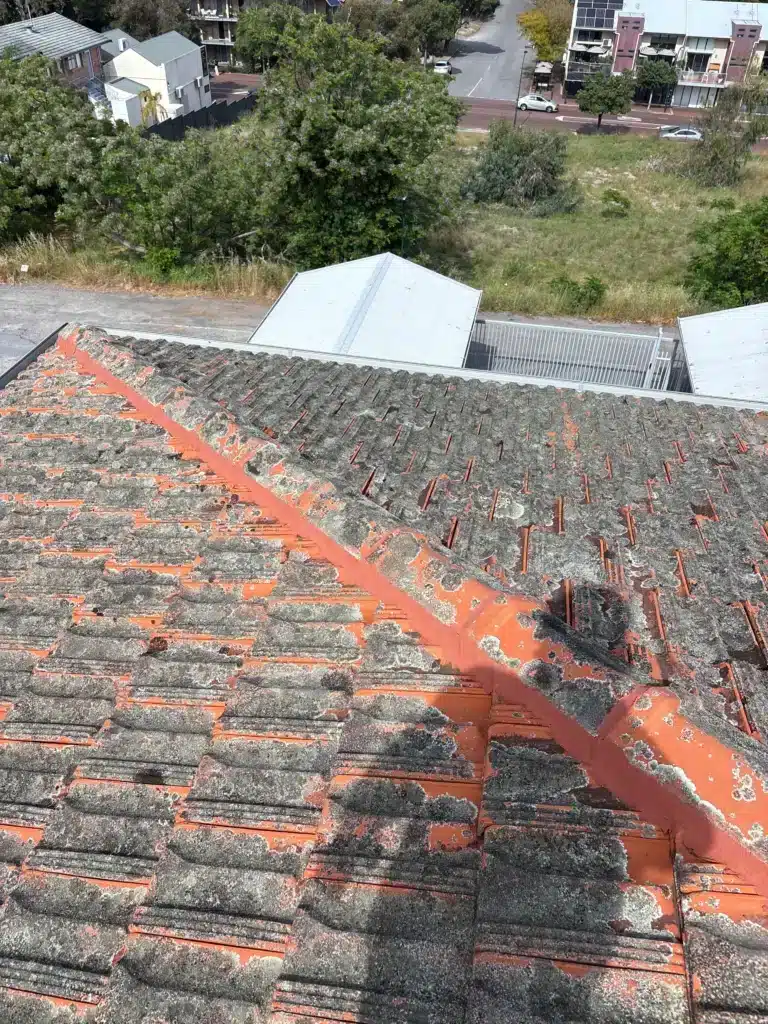
Across Perth, we often encounter cracked pointing and loose ridge caps following periods of heavy rain, particularly after winter.
Strong winds and storms can also expose existing weaknesses in a roof.
If you’ve noticed roof damage following severe weather, arranging an inspection can help identify areas requiring repair.
Why a Proper Roof Inspection Matters: A Real Insulmate Customer Experience
One of our customer experiences demonstrates why it’s important not to make assumptions about the condition of a roof.
A homeowner in Fremantle, Perth, originally booked Insulmate for a routine gutter cleaning service.
During the visit, our team noticed that a section of the roof appeared to require repointing.
Naturally, the homeowner wanted to understand why the additional work was necessary.
Rather than proceeding without further investigation, we arranged for our senior estimator to visit the property and carry out a more thorough inspection.
The inspection revealed that the issue wasn’t limited to deteriorating pointing. Some of the ridge capping also required repairs.
After explaining our findings, we completed the necessary roofing work to address the identified problems and reduce the risk of potential future leaks.
The homeowner was happy with the result.
The lesson for homeowners: What initially looks like a simple pointing issue can sometimes involve loose or damaged ridge caps as well.
A Real Example of Why Gutter Cleaning Services Save Money
The ridge capping cost and roof repointing cost in Perth can vary depending on your roof’s condition, size, and the extent of repairs required. At Insulmate, we’ve found that neither service is necessarily cheaper, as every roof has different repair needs.
For example, repointing a large section of roof may cost more than replacing a few damaged ridge caps. Similarly, repairing several loose or broken ridge caps may involve more extensive work than simply renewing deteriorated pointing.
Several factors influence the overall cost:
Extent of damage: The number of damaged ridge caps and the amount of cracked or deteriorated pointing.
Roof size and design: Larger or more complex roofs may require additional materials and labour.
Repair requirements: Whether the work involves repointing, rebedding, repairing, or replacing ridge caps.
Roof accessibility: Steep roof pitches, difficult access, and working-at-height requirements can affect the cost.
How Long Does Roof Repointing Last?
Based on our 16 years of roofing experience across Perth, roof repointing can typically last around 10–15 years, depending on the roof’s age, existing condition, materials, and exposure to weather.
However, this is a general estimate rather than a guaranteed lifespan. Regular maintenance plays an important role in keeping ridge capping and pointing in good condition.
At Insulmate, we recommend annual roof inspections to identify early signs of deterioration and determine whether repointing, rebedding, or ridge capping repairs are needed.
Why We Recommend an Inspection Before Quoting
Rather than providing a general price that may not reflect your roof’s actual condition, we prefer to inspect the property first.
This allows our team to identify the underlying issues, explain the recommended repairs, and provide a transparent quote based on the work required.
Our goal is to help Perth homeowners understand their options and avoid paying for unnecessary repairs.
Why Perth Homeowners Choose Insulmate for Ridge Capping and Roof Repointing
Choosing the right roofing company for ridge capping and roof repointing is about more than just fixing cracked mortar or replacing damaged ridge tiles. Professional roof repairs help protect your home from water leaks, loose ridge caps, and further deterioration caused by Perth’s changing weather conditions.
Perth homeowners choose Insulmate for:
16 Years of Roofing Experience
Licensed and Trained Professionals
Honest, Transparent Quotes
No Unnecessary Upselling
Thorough Roof Inspections
Expert Ridge Capping Repairs
Quality Roof Repointing Materials
Preventative Maintenance Advice
Clear and Reliable Communication
Quality Workmanship and Warranty Options
At Insulmate, we don’t believe in recommending repairs your roof doesn’t need. Our team takes the time to inspect your roof, explain any issues, and provide practical solutions based on its condition. Whether you need minor repointing or more extensive ridge capping repairs, we focus on honest advice, reliable workmanship, and helping Perth homeowners protect their roofs for years to come.
What Happens During Insulmate's Roof Inspection and Repair Process?
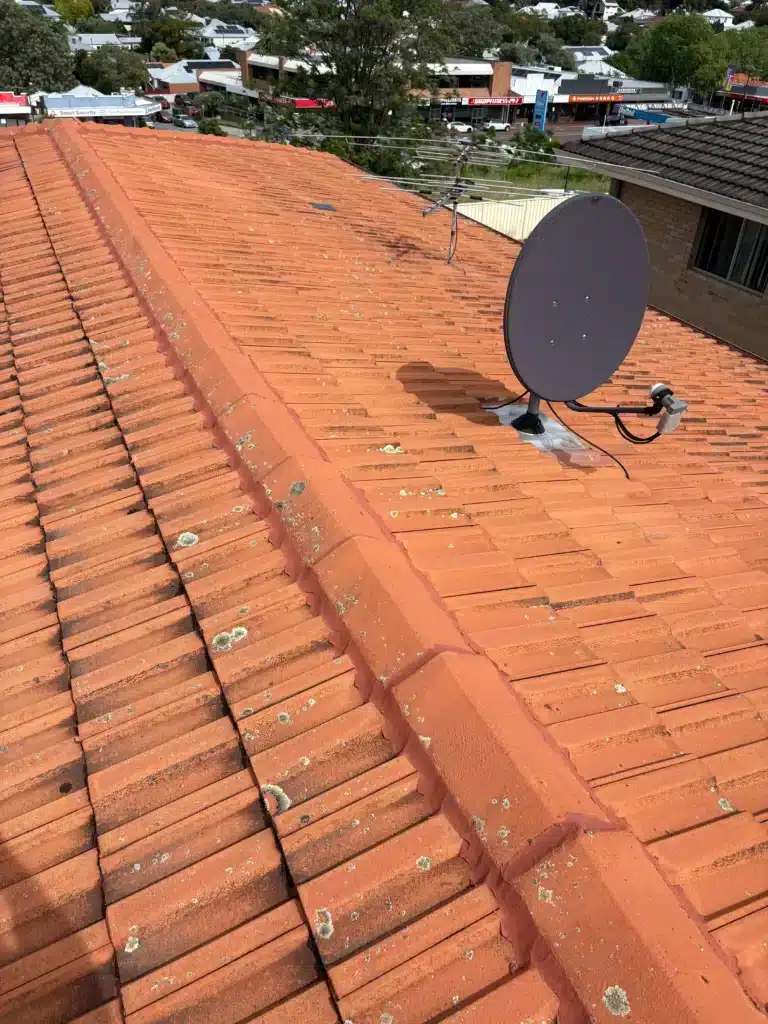
We understand that many homeowners aren’t familiar with roofing terminology or repair methods.
That’s why our approach focuses on identifying the problem and clearly explaining what work is required.
Step 1. Inspect the Roof
We begin by inspecting the roof to assess the condition of the ridge caps, pointing, and other relevant areas.
This helps us understand whether the problem involves deteriorated pointing, damaged ridge caps, or issues that may require additional work.
Step 2. Explain Our Findings
Once we’ve assessed the condition of the roof, we explain what we’ve identified and why a particular repair may be necessary.
We believe homeowners should understand the reason for the recommended work before making a decision.
Step 3. Recommend Suitable Repairs
Depending on the condition of the roof, our recommendations may involve:
Repointing existing ridge cap tiles.
Repairing loose or damaged ridge caps.
Replacing broken ridge caps.
Rebedding ridge caps where the existing bedding is no longer suitable.
Combining repairs and repointing when necessary.
The final scope of work is outlined in the quote.
Step 4. Complete the Agreed Roofing Work
Once the customer approves the quote, our trained team carries out the agreed repairs.
For suitable tiled roofing applications, we commonly use Westflex Starpoint as our pointing material.
Step 5. Respond to Any Post-Repair Concerns
If a customer reports an issue after the work, such as a leak following rainfall, we can arrange a further assessment to investigate the concern and determine an appropriate solution.
Our aim is to provide clear communication and address roofing issues based on the actual condition of the property.
Frequently Asked Questions About Ridge Capping and Roof Repointing
Is ridge capping the same as roof repointing?
No. Ridge capping refers to the tiles or components covering the roof ridge, while roof repointing involves repairing the pointing material around them. Depending on the roof’s condition, you may need repointing, ridge capping repairs, or both.
Can cracked roof pointing cause leaks?
Yes, cracked or deteriorated pointing can allow water to enter vulnerable areas of your roof, particularly when gaps develop. However, not all cracks cause leaks, so a professional inspection is recommended to identify the actual problem.
Does every ridge cap need replacing when repointing a roof?
No. If the ridge caps are secure and in good condition, repointing alone may be enough. However, loose, broken, or poorly supported ridge caps may need repairing, rebedding, or replacing before repointing.
How often should ridge capping be inspected?
At Insulmate, we recommend annual roof inspections to identify cracked pointing, loose ridge caps, and early signs of deterioration. Additional inspections are advisable after severe storms or heavy rainfall if damage is suspected. We often suggest to do gutter cleaning.
Is roof repointing suitable for Colorbond roofs?
No. Traditional roof repointing is generally used on tiled roofs, while Colorbond roofs have metal ridge capping and flashing systems. Repairs typically involve checking and fixing damaged metal capping, fasteners, or seals.
Is rebedding the same as repointing?
No. Rebedding involves replacing the mortar beneath ridge cap tiles to secure them, while repointing involves applying flexible pointing material along their edges to help seal and protect them.
Can I repair ridge capping myself?
While minor damage may seem easy to fix, ridge capping repairs involve working at heights and require proper roofing knowledge. Hiring trained roofing professionals helps ensure repairs are carried out safely and underlying issues are properly addressed.
We'd love to hear from you
Contact Information
You can reach out to us and request a quote by using the contact form on this page.
Alternatively, you can contact us to discuss your roofing requirements using the methods below.